Bench Phase
Water Division Evolution
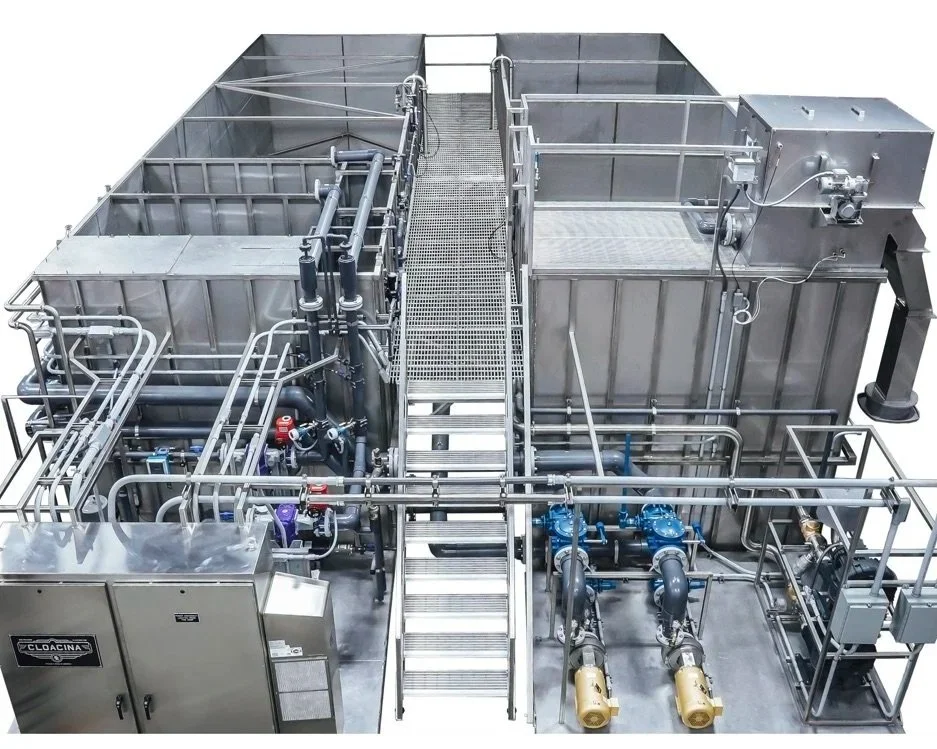
2017- Vandenberg Dunes Limited Partner’s engineers designed a Cloacina Membrane Bioreactor (MBR) to convert all the human wastewater from the proposed golf resort into irrigation water for the five courses.
2019 - In the draft San Antonio Basin Groundwater Sustainability Agency plan GSI Water Solutions recommended investigating using treated produced water from oil for irrigation and additional water supplies.
2021- Vandenberg Space Force Base informed Larkin Group Sustainable Solutions (LGSS) that because of drought we need to find a non-groundwater, non-State Water source of water for irrigation. Magna Imperio designed a multi-stacked treatment train built around Reverse Osmosis with additional pre and post treatment to convert produced water into irrigation water.
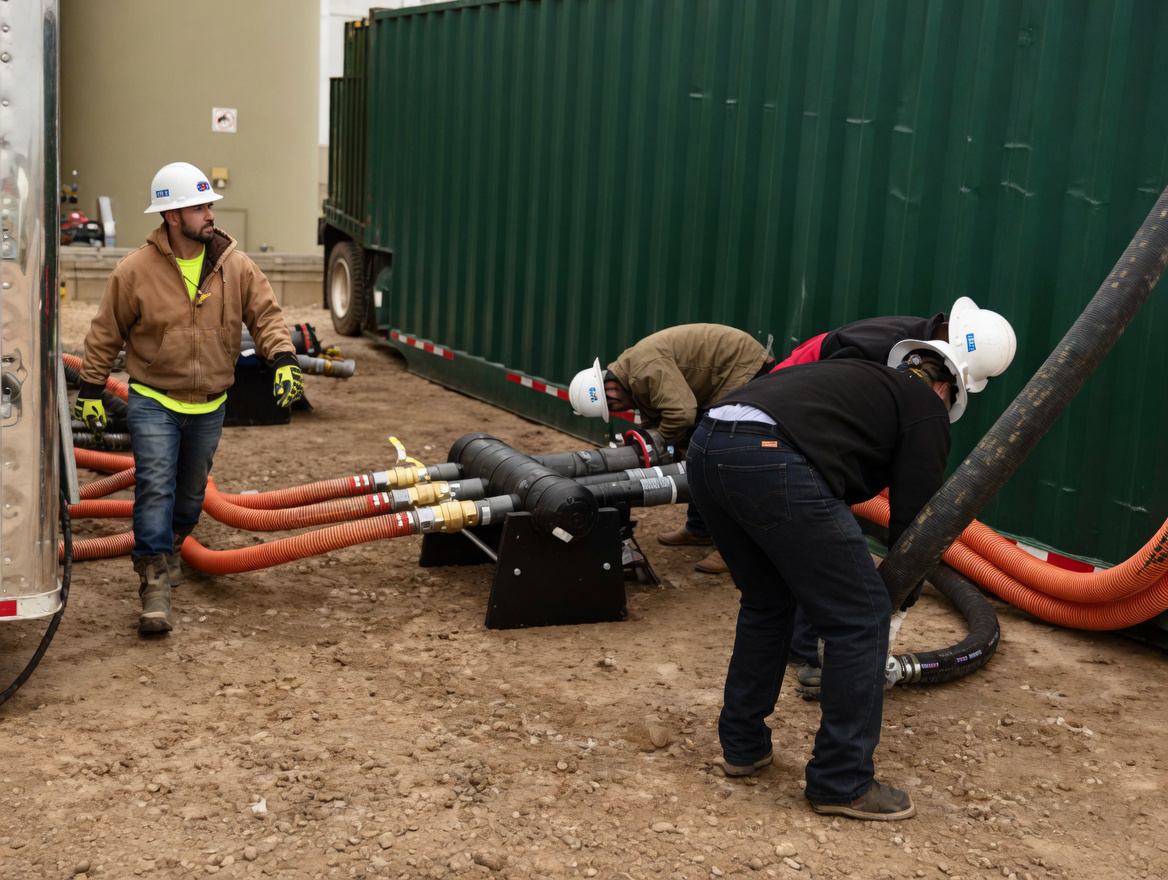
2021- LGSS was introduced to BrightWater HDC which focused on hydrodynamic cavitation. We did an initial visit and some batch testing at the Codiga Resource Recovery Center at Stanford University.
2022 - MNS Engineers designed a BOD for a Wastewater Reclamation Project to irrigate the golf complex as an alternative to produced water.
2022 - MNS designed a Water Reclamation Facility using produced water for irrigation of the golf complex.
Pilot Phase
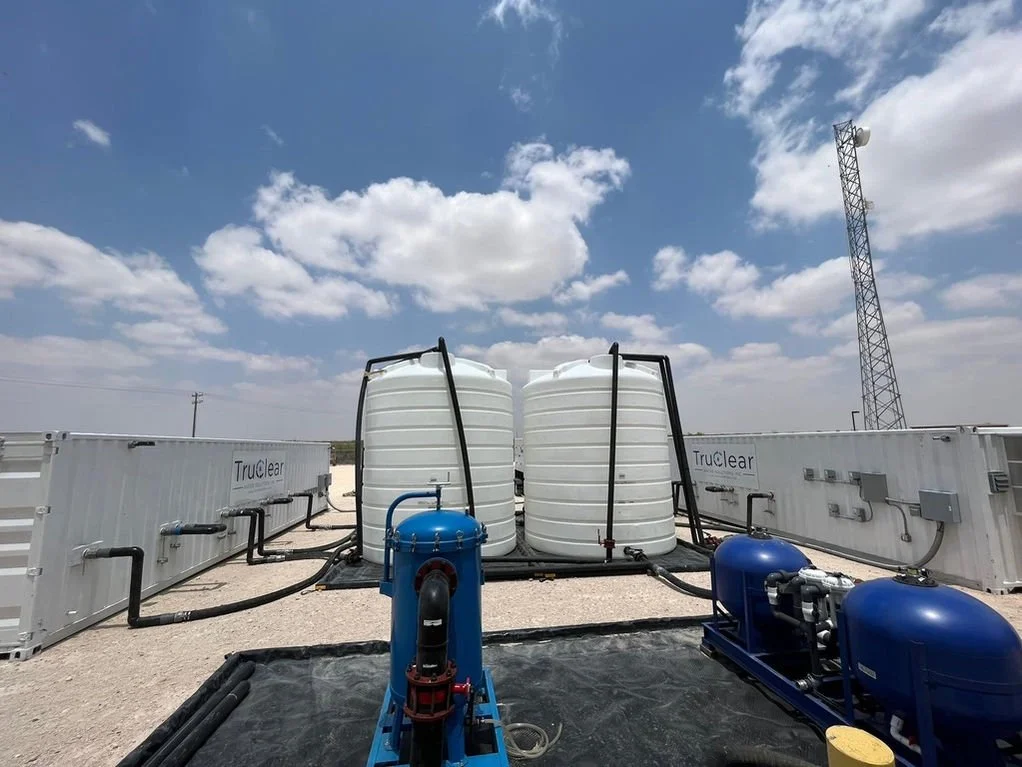
2022 - After much research we focused on Hydrodynamic Cavitation with the BrightWater HDC. Following more lab and water sample testing BrightWater HDC presented a proposal for a Pilot Test for the Treatment of Oilfield Produced Water to be conducted on Firefighter Hill on VSFB.
2022 - During our due diligence period on Hydrodynamic Cavitation we became aware of Clark Easter and Global Water Innovations.
2023 - In January Santa Barbara County effectively “shut in” SPR by denying their new trucking permit thus halting operations and postponing our pilot test on Firefighter Hill on VSFB. BrightWater HDC then conducted a pilot by shipping SPR produced water to their site at East Valley Remediation Facility in Mecca, California.
2023 - The Larkin Group and Global Water Innovations (GWI) form a Teaming Agreement that in part has GWI taking over all pilot testing for both companies.
2024 - GWI determines that in a head-to-head competition AOP (Advanced Oxidative Processes) is a more efficient and cost effective pretreatment approach for treating organics, carbon chains, heavy metals, etc. than Hydrodynamic Cavitation. The Larkin Group will now focus on that pretreatment softening approach in our treatment train for all of our combined pilots.
2025 to 2026 - GWI carried out a groundbreaking series of 5 pilots across the state of California demonstrating the inland desalination can now routinely and cost-effectively achieve 98%+ water recovery on brackish water, instead of the 80 to 85% levels that users have traditionally been forced to accept. This achievement will effectively eliminate brine disposal as an economic barrier for inland desalination projects. Achieving Zero Liquid Discharge (ZLD) is now practical for every inland desalination project. Not only fully recovering the water that was previously being wasted with treating brine as a waste to be disposed of, but doing it at a cost cheaper than the prior disposal approaches involving trucking, deep well injection, ocean disposal, etc.
2025 - GWI identifies and partners with the leading AOP technology in the world for the pretreatment of difficult water sources - produced water, food waste, pharmaceutical and pesticide residues, single contaminants, heavy metals, and even PFAS. Successful pretreatment of these kind of contaminants is the critical first step to successful subsequent ultrafiltration and desalination of these kind of impaired water sources.
2026 - The Larkin Group Sustainable Solutions merged its Water Division with Global Water Innovations. Owen Larkin becoming president of GWI with Clark Easter remaining as CEO.
The Five Pilots Carried Out by GWI Demonstrated 99% Water Recovery is now Possible for All Inland Desalination Projects!
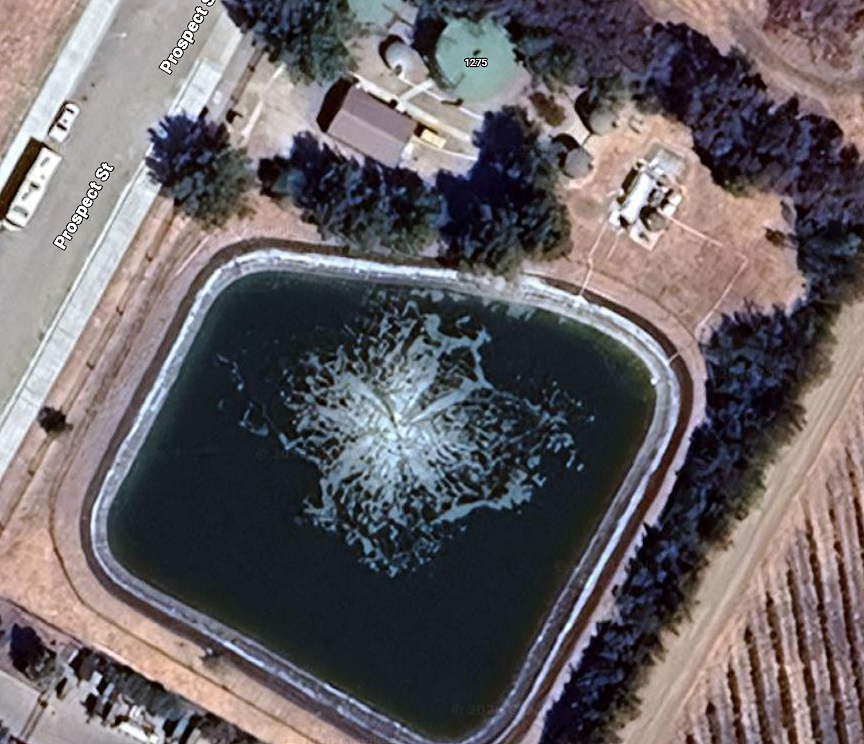
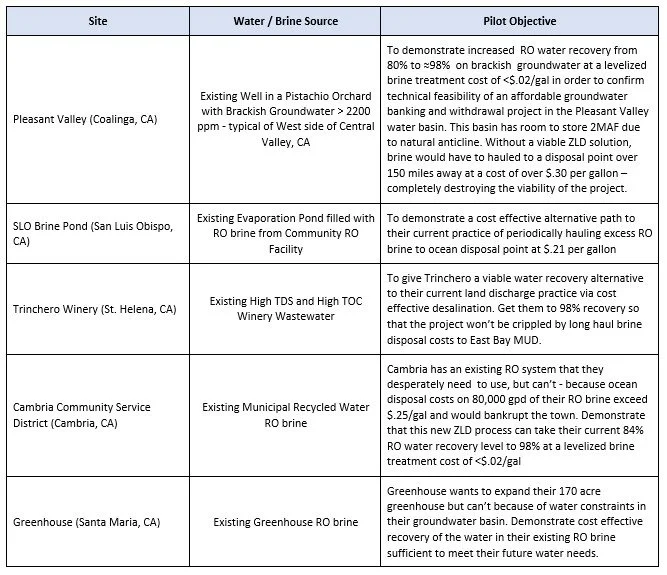
These 5 pilots, carried out by Global Water Innovations, Inc. at various client sites, were funded through a grant from the National Alliance for Water Innovation, with the money provided by California’s Department of Water Resources (CA DWR). At each pilot site, water recovery was increased from the existing RO limit (typically in the 80 to 85% range) all the way up to 98%+.
This was done at a levelized cost significantly less than the site’s existing disposal options - i.e. for Cambria the pilot demonstrated a levelized cost of <$.02 per gallon, as compared to the $.25 per gallon Cambria is currently forced to pay for trucking and ocean disposal.
Full study results can be found in a paper published June 5, 2026 in Vol 8, Issue 86 of the Academic Journal of Research and Scientific Publishing. The paper is titled “High-recovery Inland Brine Management for California Water Resilience” and the authors are John Webley, Michael Greene, and Clark Easter.